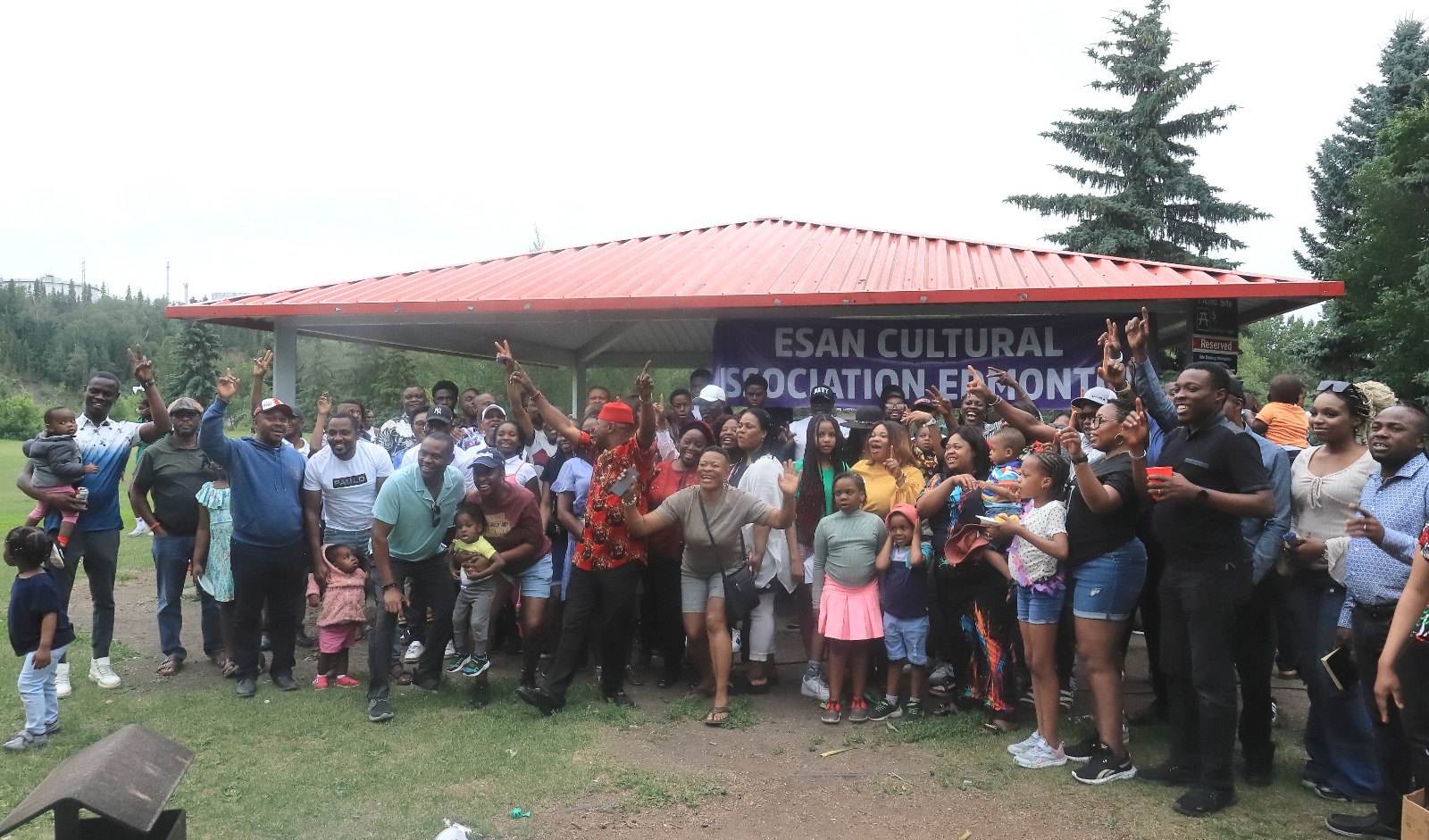
The Esan people (Esan: Ẹ̀bhò Ẹ̀sán) are an ethnic group of south south Nigeria who speak the Esan language. The Esan are traditionally agriculturalists, trado-medical practitioners, mercenary warriors and hunters. The modern Esan nation is believed to have been organized during the 15th century, when citizens, mostly nobles and princes, left the neighboring Benin Empire for the northeast; there they formed communities and kingdoms called eguares among the aboriginal peoples whom they met there.
Historically, Esan traces their ancestry to the Bini (Edo) people of the powerful pre-colonial African kingdom of Bini Empire in Nigeria. There are on the whole 35 established kingdoms in Esanland, each of which is headed by a king called an Onojie. Some of these kingdoms include Ewohimi, Ekpoma, Ubiaja, Uromi, Igueben, and Ewu, Ewatto, Irrua, Ubiaja, Ebele, Ehor, Ugboha, Ogwa, Emu, Opoji etc. in central Edo State, in southern Nigeria.
Esanland is bordered to the south by Benin, to the south-east by Agbor, to the north and east by Etsako, to the west by River Niger. From Ewu to Benin City, the State capital, is 100 kms long. There are now 35 clans in Esanland, each of which is headed by a king called an Onojie. The people of Esan have a common language, custom and tradition. The key to Esan people’s character or personality can be found in their music, dances and folklore.
Their vivaciousness and the fact that they descended from warlike ancestors can be seen in the commonest Esan Dances – EGBABỌNẸLINMIN, Ijeleghe, Asologun, etc. combines with the proud movements and agile figures of a warrior. Unuwazi’s AYELE dance in addition teaches individualism and self-reliance. No two dancers can be seen doing the same steps.
Esan are fun-loving people who have various festivities and ritualistic traditions. Their folktales and folklores serve as forms of learning and entertainment, like the famous Igbabonelimin. They have prominent traditional rulers who keep order and sanity in a complex society where beauty and manners are intertwined.